TL;DR
-
-
Most firms don’t have a business development problem. They have an activity problem wearing business development’s clothes. Activity isn’t the same as progress. And that’s the problem.
-
-
-
Hope is not an effective agency business development strategy. When you only chase leads because the pipeline got scary, urgency narrows your standards instead of protecting them.
-
-
-
Real business development starts with a distinct point of view about who should be saying yes to you, then putting genuinely new thinking where those people already go to get smarter.
-
-
-
Most “thought leadership” is just commentary. Leadership means reframing how someone sees their problem, not reminding them you exist.
-
Most firms don’t have a business development problem. They have an activity problem disguised as business development.
They go to the event and take the coffee meeting. They respond to the RFP, post the thought leadership piece, and follow up when someone introduces them to a prospect. They keep the machinery moving, which feels productive.
But activity is not progress.
Activity is movement. Progress is movement toward something you intentionally choose.
That distinction matters more than most agency leaders understand, because the majority of agencies are built on this passive hope strategy. They hope referrals keep coming and the right client finds them. They hope the next pitch goes well and the market recognizes their expertise without being shown, repeatedly and clearly, why that expertise matters.
But, as I’ve said before, hope is not an agency business development strategy. It’s an emotional support system for people who haven’t built one yet.
Urgency Narrows Your Standards
Business development fails (strategically) when it only happens under pressure. A client leaves or the pipeline gets thin and suddenly everyone becomes super interested in biz dev. The agency starts beating the bushes, chasing leads it would never choose on purpose, and convincing itself that the urgency of the need gives it permission to loosen its standards a bit.
And therein lies the problem with waiting to start your business development program when you need it, rather than when business is going well, and you have both the time and disposable cash to fund a proper business development effort.
That’s how firms accidentally become the product of whatever they were able to win. In fact, this argument was exactly the one I made in the 90s to the President of the agency I was working at here in NOLA. To my surprise, he agreed, and the next day, I became the agency’s business development guy in charge of building that long-term strategy and a mechanism to keep making progress towards it, even when things were going well.
When you think about your BD strategy, stop asking the obvious question, “How do we get more people to say yes?” That’s the wrong question. Instead, ask yourself, “Who should be saying yes to us in the first place?”
Who Should be Saying Yes to You (Your ICP)
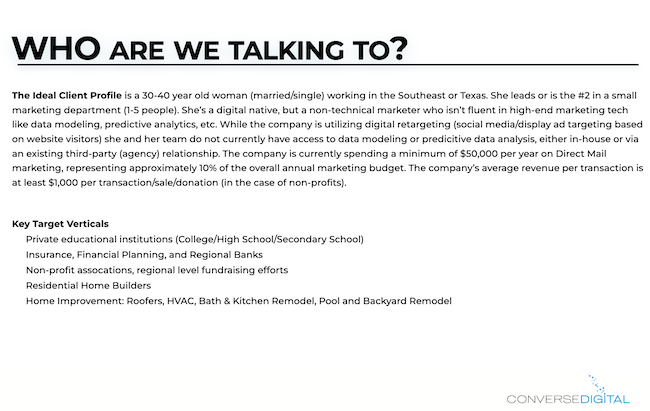
Real business development starts with a tight definition of who you want to work with. Not “mid-market companies” or “growing brands” or “leaders who value innovation.” Those descriptions are vague enough to be basically useless.
Dare to be scarily specific. Who has the problem you solve unusually well, and what do they believe? What frustrates them, and where are they already looking for answers? What makes them trust one expert and ignore another, and what would make them hear your perspective and think, “These people understand the thing we’ve been struggling to name, much less solve”?
That’s the first step towards a strategy.
The next part is showing up where those people are already paying attention. You don’t need to be everywhere. Just the Propinquity Points that assure you’re mentally available to the right prospects at the right moment.
Those places might be podcasts, conferences, niche publications, peer groups, search results, newsletters, webinars, private communities, or, increasingly, AI tools. The form matters less than the function. Just find the points where your prospects are open to being influenced because they are already looking for better thinking.
Then make sure you or your content shows up repeatedly.
Most “Thought Leadership” is Just Commentary
Two years ago, when I fielded my LinkedIn Engagement Paradox research study, one of the most significant findings was that most agencies’ content watered down the phrase “thought leadership” to the point that it meant nothing.
And it’s not just agencies. Most thought leadership isn’t leadership. It’s commentary or pontification. It repeats what the market already believes, puts a slightly better headline on it, and calls it insight. That kind of content may keep you visible, but it rarely positions you as valuable. There’s nothing wrong with useful content, but we should stop pretending every helpful “How To” post is thought leadership.
To lead with thought means putting new knowledge into the world. It means saying something that helps people see their problem differently, giving language to a pattern they’ve felt but haven’t been able to explain. It means making someone smarter, not just reminding them that you exist.
The difference is obvious when you read, see, or hear it. Generic content says, “Here are five ways to improve your business development process.” Real thought leadership says, “Your sales process isn’t broken because your people hate selling. It’s broken because your firm only sells when it’s scared.”
One informs. The other reframes. And reframing is where authority is built.
Just remember, authority does not come from declaring yourself an expert. It comes from helping the reader or listener see the difference between how they’ve been thinking and how they could think. When you create that aha moment, people start to pay attention to you. They may not hire you today, but they file you away as someone worth watching.
That matters because business development is rarely a single moment of persuasion. It’s a buildup of credibility signals over time that positions your agency as the must-call agency when there’s a problem.
Stop Treating Your Ideas as Disposable
The biggest change I’ve made in the last 2-3 years: I stopped throwing away good ideas. I used to pour weeks into a piece of research-backed content, run one webinar, send a couple of emails, post to social a few times to drive registrations, then move on to the next lead gen magnet because the idea felt old to me. That’s like a band writing a new set, playing it twice, and scrapping it because they’re bored of their own songs.
Your idea feels old because you created it and delivered it. The person who’s never heard your point of view doesn’t care how many times you’ve said it. To them, it’s brand new.
So now I run a new webinar 8-10 times a year. Same material, a different room each time, then an on-demand version that keeps working long after I’ve moved on.
Choose the Small Room on Purpose
Sure, I could run that webinar once for 200 people. Instead, I run it ten times, twenty people at a time, on purpose. Same total audience. Completely different result.
Conventional webinar advice tells you to maximize registrations. Fill the room. Chase the big number. But reach is a vanity metric when the goal is business development, not brand awareness. Nobody builds trust in a room of 200 where the host talks and everyone else hides behind a square avatar image or worse, no image at all.
Put a dozen or so good prospects in a room, and something changes. Cameras come on. People ask real questions. They pick your brain, push back, and hear their peers wrestle with the same problem they’re fighting. You walk out with conversations and names, not a registration list. That’s where a prospect becomes a person again, and business development stops feeling like selling.
The Big Business Development Lie
The future of business development isn’t more content or activity. It’s better evidence. Evidence that you understand the buyer and think differently than the agency they work with today. Evidence that you can lead them somewhere they couldn’t get to on their own, and communicate it without making them work too hard to understand and believe you.
The firms that win will not be the most prolific publishers. They’ll be the most distinctly relevant ones. The ones valuing authority over visibility. Quality over quantity.
Business development consultants like to make BD about “getting the meeting.” It’s good for business, as they say. But they’re wrong. When your KPI is “getting meetings,” you’re focusing on the wrong end of the buyer journey.
There’s an old saying, “Prepare your fields for rain.” THAT’s the foundation of a successful long-term agency business development program. Constantly making it easier for the right people to discover, trust, and remember your expertise. Do that, and the meetings take care of themselves.
That’s the job description. And the number-one question you should be asking is: Are you a good hire for it?
If not, we can help you define a distinct agency position and point of view, install the necessary business development processes, and create a Perfect Pitch to consistently close more new business.
Before you go, if you’re a first-time reader and liked this piece, why not consider subscribing so we can stay in touch?
Of course, you can break up at any time if you don’t like what we send. Till next time. 🤘
This post was originally published on The Invisible Edge, the hidden science, insights, and contrarian ideas you need to master the art of influence & persuasion to grow your agency through more effective approaches to business development. Published weekly by the fine folks at Converse Digital.